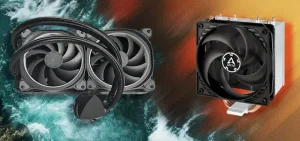
As more and more people become interested in cryptocurrency mining, these mining devices are paying a huge price in terms of energy consumption, water usage, footprint, etc. It is clear that we need smarter, more energy-efficient, and more sustainable cooling solutions. By transitioning from traditional cooling methods to Sunnycore Immersion Cooling Systems, everyone can be better prepared to handle the unprecedented performance requirements of the future while managing costs and impact on natural resources. In today’s article, let’s take a look at the operational principle in immersion cooling systems of Sunnycore.
Operational Principle of Immersion Cooling Systems
Our Immersion tank is designed to optimize its flow interaction with the servers and to efficiently remove heat from the chips.
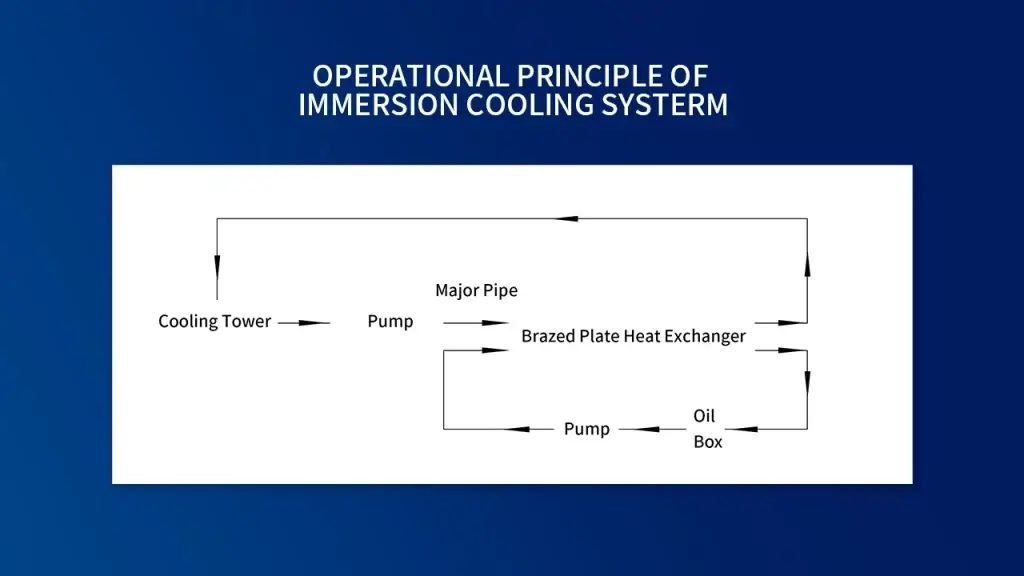
From the diagram above, we may have a question: what’s the circulation of the oil route?
The Circulation of Oil Route
First things first, the oil enters the circulating pump from the high-level circulating hot oil pipe. Then it enters the filter. It passes through the filter and then enters the heat exchanger to exchange heat. Then it enters the oil tank from the low-level circulating oil pipe. After entering the fuel tank, the cold oil will flow out from the small holes of the oil-passing plate. Finally, the hot oil comes out of the oiling plate, and in this way, the whole circulation route of the oil is completed.
The Plate Heat Exchanger
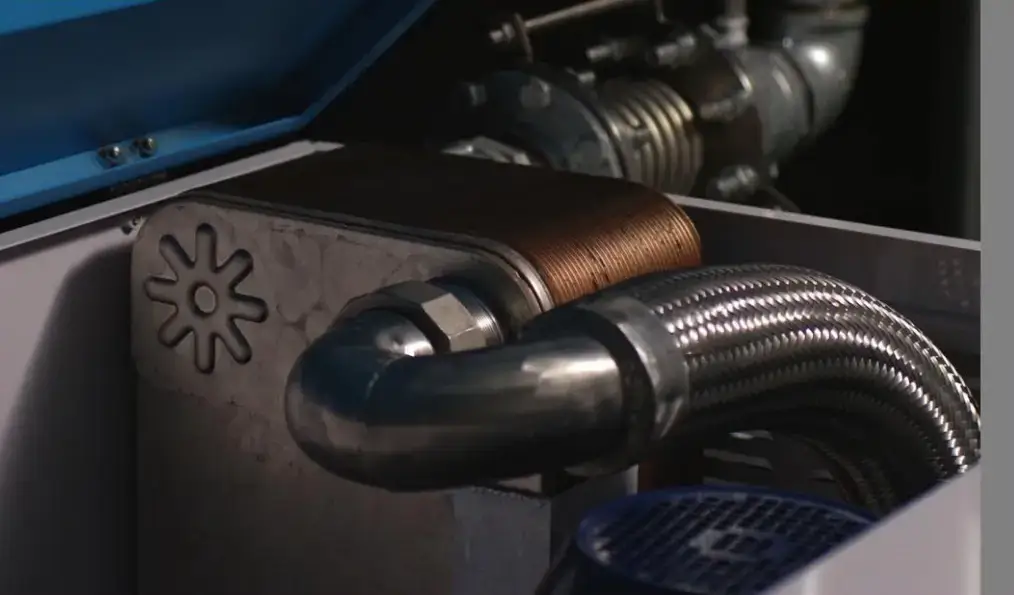
A plate heat exchanger is a type of heat exchanger that uses metal plates to transfer heat between two fluids. In most situations, an exchanger consists of a coil containing one liquid that passes through a chamber containing another liquid. The walls of the tube are usually made of metal or other substances with high thermal conductivity to facilitate exchange, while the housing of the larger chamber is made of plastic or coated with insulation to prevent heat from escaping from the exchanger. What’s more, if you want to understand how the plate heat exchanger works, you can go to our previous blog to find out: How does the Plate Heat Exchanger Work?
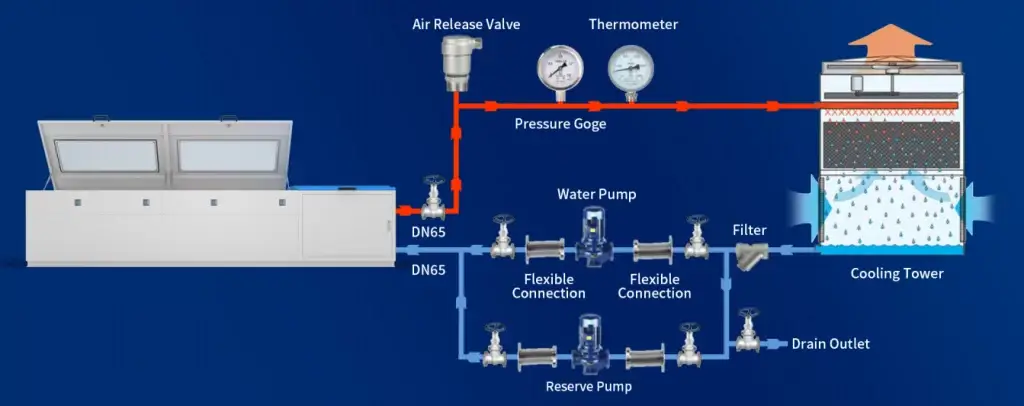
See the diagram above to have a good idea of the operational principle of immersion cooling systems.
The Facilities Equipped for Immersion Cooling: Water Tower
A water tower is a towering structure used to store and distribute water, commonly found in cities. Water towers are generally used to maintain and regulate the volume and pressure of water in a water supply network, and consist primarily of a water closet, a foundation, a support cylinder or bracket connecting the two, and a pump to provide water pressure in the water system.
When purchasing an immersion cooling product, you will need to purchase a water tower equipped to provide sufficient water supply and you can buy it locally.
Immersion cooling technology is known to be viable and superior to conventional technology as an energy-saving cooling method. If you would like to learn more about Sunnycore Immersion Cooling Systems, please feel free to email us at [email protected].